Showing posts with label Idiocy. Show all posts

Sunday, 3 November 2024

Godzilla 70th Anniversary: Godzilla Reborn

2024 isn't just the seventieth anniversary of the original Godzilla, it's also the tenth anniversary of the 2014 Godzilla, the film that brought Godzilla back from the dead. That may sound hyperbolic, but it really isn't; the Godzilla franchise was not in a good place before 2014, so it was the financial success of the 2014 film that not only put the King of the Monsters back on the map, but showed Toho that Godzilla could still be successful and beloved. As for me, I've talked about this film a million times at this point, probably more than any other film, not that that'll stop me from talking about it one more time on Godzilla's seventieth birthday. It's hardly a secret that I adore this film, but while it gets so much right and still holds up as a fantastic Godzilla movie after a decade, there is still some negativity towards this film, negativity which, as I'll spell out today, is severely misplaced.

Here's what you need to know; a decade ago, a nuclear disaster in Japan tore the Brody family apart, with Joe Brody spending years trying to prove that the meltdown that killed his wife was not what it seemed. But when Joe and his son, Ford return to the site in search of answers, they stumble into a terrifying truth. Something huge is about to be revealed, as forces far older and more powerful than anything they could possibly imagine emerge from the depths of the Earth, forces humanity is powerless to stop.

To understand why this film is so important, first we must get an understanding of where Godzilla was before it's release. This is a period in the Godzilla franchise I've talked about in the past, but it's relevant to this film, trust me. After the 1998 Godzilla crashed and burned, both creatively and financially, Toho saw fit to unretire Godzilla after 1995's Godzilla vs Destoroyah gave the monster a bitter-sweet on-screen death. Toho's revived Godzilla didn't last long however, as just five years and six films later, they were forced to retire Godzilla again when Godzilla: Final Wars bombed at the box office. The next decade was a dark age for Godzilla; while things were very slowly moving forward on a second attempt to make an American Godzilla, Toho weren't producing any Godzilla films, letting their world-famous franchise fade into obscurity. Yoshimitsu Banno, who had directed 1971's Godzilla vs. Hedorah, had secured the rights to make a new Godzilla film, and had been shopping the project around to various production studios, before Legendary Pictures got the rights to Godzilla in 2010, with Banno staying on as executive producer. This new American Godzilla, being developed at Legendary in collaboration with Toho, would stay a lot more faithful to classic Godzilla than it's 1998 counterpart had. Gareth Edwards, an independent director who made a name for himself with his 2010 film, Monsters, eventually signed on as director in 2011, while Warner Bros. would distribute and co-finance the film. 

In 2012, a teaser for this new American Godzilla was shown at comic-con and eventually made it's way online, subsequently reawakening my obsession for the Big Guy that the pressures of growing up had forced into dormancy. The wait for the film's release was agonising as to me, this was more than just a film. I was finally going to see Godzilla on the big screen, something I never imagined could happen, yet there I was, furiously digging through online forums for anything about this film. I once again wanted the toys, only this time they weren't illusive and expensive, I could buy them from my local Toys-R-Us, much to the disgust of my then-girlfriend. And of course, my mother, realising just how special this moment was for me, booked IMAX tickets, though that was kept a secret from me until I figured it out for myself on the drive to the IMAX. Since that day back in 2014, a lot has changed in my life, though listing all the seismic shifts in my personal life over the past ten years isn't why we're here, one thing that has never changed is that this film gives me the fizz. I know it's not perfect, I've thought an awful lot about it's imperfections and how I would try to fix them. I can even partly understand why this film would be underwhelming to certain people who didn't have their expectations met, I would also like to add that for those people, the issue was never the film, but their expectations. There are issues with the 2014 film, but many critiques of the film don't expose these issues, rather, they expose a lack of understanding and appreciation for the Godzilla franchise. In many ways, this film is one of the most important in this franchise, as I shall now, in my typically long winded way, try to explain. 

The film's opening is something I've gushed about many times, it's an opening sequence that sets the tone and sense of scale of the film beautifully. Alexandre Desplat's haunting and energetic Godzilla theme builds to it's sensational crescendo as archived footage of Operation Lucky Dragon, the US Army's attempt to kill Godzilla in 1954, plays. The sequence reaches it's peak in tandem with Desplat's score as Godzilla begins to emerge from the sea, instantly vanishing in the atomic Armageddon of a nuclear detonation. The blast wave from the bomb smashes into us, the audience, and as the film's title fades in from the blinding white flash, ash begins to fall and in the distance, people can be heard screaming in terror. Just how reflective of the rest of the film this intro sequence is is remarkable, especially when compared to the eerily similar intro sequence of the 1998 film, and how that intro sequence didn't represent the film it was in at all. Where this sequence really knocks it out of the park is how well it sets up Godzilla himself. In addition to being an acknowledgement of the real world event that inspired the original Godzilla, the Castle Bravo test of 1954, it establishes a lot of lore and history for this world, as well as some of this Godzilla's core character attributes without the need for exposition or playing the film's cards too early. All of the information we need to understand this world and this monster is presented to us here, through visuals alone, which is remarkable.

From just this brief sequence, we already know that Godzilla is massive, with his spines rising out of the water like mountains on the ocean's surface. We know that he is old, already being fully grown and instantly recognisable as Godzilla before Castle Bravo, and we can go further still, as the sequence also features drawings and diagrams of dinosaurs and ancient, mythical monsters, as well as Charles Darwin's book, On The Origin of Species, implying that Godzilla is a product of evolution, and that there is truth behind the ancient monsters of myth and legend. We also know that he is practically indestructible, surviving being at ground zero of a nuclear detonation. We can dig further here too, with the intro establishing that the US Government has known about Godzilla for more than sixty years, but has kept his existence a secret from the public, framing their attempts to kill him as atomic tests, all while a secret government agency; Monarch, has been quietly studying the creature and possibly others like him for decades. Everything about Godzilla should be impossible; nothing can be so old, so massive, and able to shrug off getting nuked. Something as huge as the fact that monsters exist could never be kept from the public for so long, but here he is, being presented as so firmly rooted in real world science and history that he becomes real; just another part of this world that we already know so much about, just from this tiny sequence. 

Something else that this sequence masterfully does is put the god back into Godzilla, after his 1998 counterpart got taken down with missiles, this Godzilla wakes up, gets nuked, then goes back to sleep. This Godzilla shrugs off not just the pinnacle of humanity's destructive potential, but also humanity's crowning achievement in science and engineering, he didn't care that we threw the biggest bomb we had ever built at him. Having unleashed the power of the atom, humanity thinks of itself as the rulers of Earth, but there is nothing humanity can do against this creature, he is simply beyond us, beyond our ability to understand or control, and far beyond our ability to fight, he has a power that humanity can only ever wish it had, he's truly a living god. We'll get back to Godzilla a bit further in, but there's more film to talk about first. The film starts proper in 1999 with Monarch head, Dr Serizawa and his assistant, Dr Graham on a very Jurassic Park-esque helicopter ride through the jungles of the Philippines. Serizawa quietly inspects a pocket watch before they touch down at a mining site where something incredible has been found. Believing they'd found a Uranium deposit, the miners accidentally dug into the tomb of a massive creature. Inside, they find evidence that something inside the tomb was alive; a spore or egg, perfectly preserved amongst the fossilised bones, along side a similar structure that seems to have recently broken open, with whatever was inside it having burrowed its way out to sea. 

Far away at the Janjira nuclear power plant, Joe Brody is growing increasingly worried about bizarre seismic activity that seems to be getting closer to the plant. The situation quickly gets out of control when the plant is rocked by an earthquake which breaches the reactor. I think a majority of the complaints made about this film come from how it handles it's human characters, specifically how it handles Joe Brody. When we meet Joe, he's so concerned about the strange tremors near the plant that he forgets it's his birthday, having to be reminded by his loving and supportive wife, Sandra. It only takes minutes for his entire life to fall apart when he is forced to shut the containment shield with Sandra still on the other side. As the shield closes, he gets one final chance to see his wife, who asks him to take care of their son before the door seals shut, trapping her forever with the failed reactor, while Joe watches through the tiny porthole window, completely powerless to save her. Right from the start, we have a strong emotional investment in Joe, and by extension, his crusade for the truth as at it's core, it's his crusade for peace. He feels responsible for Sandra's death, he wants to know why the reactor failed, not for the sake of finding the truth, but to find an explanation for why his wife died, and to free himself of the guilt of unknowingly sending her to her death. Couple this with the performance of Bryan Cranston and you have a magnetic character whose journey we want to see to it's completion. But half an hour later when he dies, and with no one else for us to become emotionally invested in, all of that investment in the human story evaporates. 
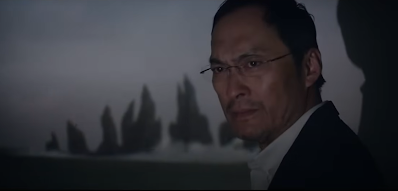
We start out with this amazing and compelling character that we like, only for him to get taken away and replaced with an emotionally cold and stoic soldier. Ford Brody is not a bad character, contrary to what some may say; whereas Joe let the grief and guilt of losing Sandra drive him insane, Ford has refused to follow his father into despair, instead relentlessly pushing forward and trying to protect what he still has. As the film's events unfold, he is forced to choose between his family and his duty, after losing his mother and father, he pushes ahead with his mission because of his desire to protect what's left of his family from the monsters. But with all that being said, when compared to Joe, Ford's just kind of wooden, and while it's not exactly a fair comparison, it does make the film feel emotionally hollow in it's second and third acts. In addition to the Brody's, we have a host of  genre archetypes to round out the cast, army guys and scientists who follow the action and try to find solutions to the monster problem. But while characters like Dr Serizawa and Admiral Stenz are great additions to this Godzilla movie line up, they, like Ford and his wife, Elle, are little more than cogs in this film's machinery, functions of a story that is greater than the sum of it's parts. Something that you could see as a problem is the relative lack of agency the characters have; they are not active characters who drive the events of the story, in fact, outside of a handful of circumstances, they have no real impact on the story. This is nothing new to the Godzilla franchise, though it's understandable that someone unfamiliar with said franchise would be unimpressed that the human characters don't really matter, I, however, don't see it as a problem, I think it was the point. 

Like the original Godzilla from 1954, this film has layers upon layers to dig into, there are deep thematic elements at play in Godzilla 2014 that really make it stand out from other monster movies. Godzilla isn't just a big lizard in this film, like the best of the series, he is representative of something bigger, and while the details of what he represents are very different from his Japanese counterpart, the spirit of those classic films is very much still here. In both films, Godzilla is a god; a being whose nature is so far removed from ours, and whose size and power so completely eclipses ours, that we have no answer to it. But while the original Godzilla was a wrathful monster, indiscriminately delivering punishment upon the human race, this Godzilla fills a more protective role in the world, restoring the balance when it's threatened by destructive forces, be they human or monster. While the 1954 Godzilla is a physical representation of the cruelty of war and the terrible power of the atom, this Godzilla is a physical representation of the uncontrollability of nature, an unstoppable force that's apathetic to the chaos and destruction it causes, and that cannot be contained or defeated, no matter how hard we try. Through the film's visuals, Godzilla's true scale is perfectly portrayed, inspiring a sense of awe and majesty that other monster movies struggle to capture. Aspects of his design also feed into this Godzilla being an embodiment of nature's wrath, with his skin being rocky in texture and the colour of basalt, his spines resembling jagged rock formations, and his posture and body structure being a lot more animalistic than previous suit incarnations. 

But unlike the 1998 film, this Godzilla still looks and sounds like Godzilla, as like with the more thematic elements of the film, the people making it understood and respected the franchise, trying to do it justice instead of reinventing it for a new audience. By comparison, there is less to be said about the MUTO's, Godzilla's opponents in the film, though like Godzilla himself, there is something to be said about how they serve the film's themes. The MUTO's are depicted in this film as the natural consequence of humanity's hubris; a force of chaos unleashed onto the world by humans who believed they were in control. Like Godzilla, they are nature's uncontrollability manifest, but while Godzilla brings order and balance, the MUTO's bring chaos and destruction, they're driven by their need to reproduce, and don't care about the cost of their proliferation on the wider world. They are the greed and the ignorance of humanity, endlessly consuming without considering the impact of their actions on the environment, while Godzilla is positioned as nature's answer to the imbalance they create. But the film's theme of human arrogance never comes across as heavy-handed; the MUTO's are never presented as purely villainous, and even have a sympathetic edge to them in some moments, while the humans themselves are never depicted as being intentionally cruel to the planet, something plenty of other films with environmentalist messaging are more than happy to do. 

Like the MUTO's, humanity is ultimately just a victim of it's own nature, and in the grand scheme of the natural order, we are no more significant than the many bugs and lizards that crawl beneath our feet, in the same way we crawl beneath the feet of the gods. On top of having strong thematic significance, they are pretty cool monsters too, being bizarre bug-like creatures that can generate electro-magnetic pulses and feed on radiation. While they're not as exciting or memorable as many of the classic Toho monsters like Rodan and Ghidorah, they, like the film's human characters, are serviceable components of this film's story and themes. That's a lot of talk about themes and messages, but if the film failed to back it up, the film would fail. To many, the film did fail; it didn't deliver the kind of kaiju action they expected from a Godzilla film, proving to be too subversive for their tastes, which is a complaint I understand, even if I don't agree with it. As well as the complaints about the film's human characters, one major issue a lot of people had with this film was how it uses Godzilla, or rather, how it doesn't. At numerous points, it looks like the film is gearing up for an epic action sequence with the monsters, only for it to cut to the next scene before the action can start. The worst offender in this regard is Honolulu, where Godzilla makes his first epic appearance. The scene is a masterclass in building suspense, relentlessly mounting the tension and the danger as the MUTO causes chaos at the airport while something enormous approaches from the ocean. 

As it approaches, Serizawa rushes up the the flight deck, convinced that it's Godzilla, and through his binoculars, he watches three massive rows of spines slicing through the water towards them. As it dives under the carrier, it pushes up a massive bow wave that comes ashore alongside it, flooding the city and washing away countless people. As people seek refuge from the tsunami on the roofs of buildings, they witness the impossibly massive creature making its way out of the sea and towards the airport, apathetic to the soldiers unloading their rifles into it. When a helicopter attacking the MUTO is knocked out of the sky by the creature, it sets off a chain reaction of destruction. The people gathered in the terminal watch in complete terror as explosions rip through the airport, until their screaming is silenced by the boom of an impossibly massive footstep, the camera pans up the body of the creature, finally revealing Godzilla in all his glory, with the scene ending on his earth-shattering roar. This entire sequence is pure gold, beautifully building the suspense for that climactic moment where we finally see Godzilla, only for the film to cut to the next scene right before the fight begins. In the past, I've attempted to rationalise this bait and switch, but these days, I honestly feel that it was a mistake to cut away from this fight, and I think that like if they hadn't killed Joe Brody in the first act, another of the main complaints made about this film would have never been made. 

What I think largely makes up for the film's constant teasing is it's pacing, which is fantastic. The film takes a bit of time to get going again after the Janjira meltdown, but once the MUTO escapes, the film gets going again and never stops. From the MUTO escape all the way up to the final battle in San Francisco, Godzilla is a rollercoaster ride, never stopping or slowing, constantly cranking up the heat as this monster apocalypse continues to get worse and worse. Once Godzilla makes his entrance at the half way mark, he is a constant presence throughout the film. This more than makes up for his relative lack of screen time in my opinion, as even without him being on screen, the film never forgets that he's the main attraction, which only makes those moments where he does appear all the more magical. There's the flawlessly executed Honolulu sequence where he is revealed, and from that point on, the film regularly drops little bits of Godzilla action throughout, until it inevitably comes time for the final showdown in San Fransisco. Even after ten years, this finale is fantastic, cranking the stakes to all new extremes as Godzilla fights for the future of Earth while the humans race against time to extract a live nuke from the city. Everything the film had been building comes to a head here, and ten years and four more films later, this finale still has some of the hardest action and most awesome moments in the entire Monsterverse. Nothing will ever beat that moment in this film where Godzilla uses his atomic breath for the first time, I vividly remember how I felt when I saw that in the IMAX ten years ago, it was the coolest thing I had ever seen and depending on what mood I'm in, it still is. 

Everything gets wrapped up perfectly in the film's ending which, while very different to the original film's ending, reminds me of it in a few key ways. As the film opens with a family getting torn apart, so it ends with a family being put back together as with the threat gone, Ford, Elle and Sam can finally be reunited. Sure, the evil monsters are dead and order has been restored, but the world can never truly return to the way it once was now. Godzilla has fundamentally changed the way we see the world, humanity, in its attempts to play god, has awakened monsters beyond our most terrifying nightmares, and if we don't learn from our mistakes and rediscover our respect for the natural order, we will only continue to create these monsters. The difference this time is that when the monsters come, Earth has a defence mechanism against them, a god that will wake up when he's needed to make things right, and when he comes, it's best that we know our place and get out of the way.  This film's ending calls humanity's dominance over Earth into question, begging the question of where we truly are on the food chain. In doing so, it brings the film's environmentalist and anti-humanist themes full circle, without coming across as heavy handed or preachy, like everything else in this wonderful film, it's done with restraint, subtlety and respect, both for it's audience and it's source material, while also making the film feel complete. While it's certainly not as profound or effective as the original film's ending, it, nonetheless, brings home this film's message in a satisfying way.

Let Them Fight

After America's first attempt to adapt Godzilla took the god out of him, the 2014 film comes across as a labour of love for this franchise, from people who understood the importance of this monster, and wanted to restore him to his rightful place as the King of the Monsters. Yet while the film isn't a masterpiece by any means, they absolutely succeeded in their goal of bringing Godzilla back to life. There are problems here that people are right to criticise, but I find it very unfair to criticise this film for it's handling of Godzilla as in all honesty, there are few films in this franchise that do him even half the justice that this one does. In spite of his lack of screen time, Godzilla's presence dominates this film, and while it takes the monster in a new and, at the time, unique direction, it never forgets that it's Godzilla; it never tries to reinvent this titan of film, nor does it forget why he is so important or so popular. It takes it's simple, by-the-numbers premise of giant monsters attacking cities, and uses it to tell a story that deals with humanity's place in the world, one filled with existential themes and ideas that elevate this otherwise simple monster movie into something a lot more special, all while being a really well paced and beautifully made film that still remains the peak of the Monsterverse, even all these years later. Very few films understand their task as well as this one, and fewer still can pull it off, but Godzilla is truly something else, there's a magic to it for me that hasn't faded in a decade and probably never will, I adore it, and it is an absolute must watch. 

Godzilla 70th Anniversary: What Godzilla Means To Me

On the 3rd of November 1954, Japanese film studio, Toho released a film that redefined an entire genre, touched the hearts of a global audience and gave birth to the longest running film franchise in history. Spawned from the darkness of Japan's post-war trauma and the anxieties of the Atomic Age, it was a film that held nothing back; an ugly, bleak, apocalyptic tale of a city being destroyed by a radioactive monster. That film was Godzilla, and to say it's left a mark on the world of film would be one hell of an understatement. It would also be an understatement to say that the film has left a mark on me as without Godzilla, I know for a fact that I would be a completely different person today. He's a monster that has been a part of my life since I was a child, occasionally a source of frustration, but also a source of immeasurable happiness. Through the ups and downs of my life, Godzilla has been one of the few constants and in recent years, as the monster has reached new heights of international popularity and success, my obsession with him has only grown stronger. Yet when people ask me what it is about Godzilla that I'm so in love with, I still struggle to put it into words, so for his 70th birthday, I suppose I'll give it another try.

I'm not entirely sure when or how I was first introduced to Godzilla, but through what I can get out of my family and what little I can piece together myself, I have a general idea. As a kid, I had my obsessions, not much has changed on that front, these obsessions come and go but can often become quite intense, one of the quirks of being autistic, I guess. Somewhere around the mid 2000's, I was obsessed with something the vast majority of kids get obsessed with, dinosaurs. I loved dinosaurs, I loved watching films with dinosaurs in them, playing games with dinosaurs in them, and playing with toy dinosaurs. I assume then that at some point, someone in my family, probably my grandparents or dad, saw that a Godzilla film was on the TV and recorded it for me, after all, I love dinosaurs and Godzilla is just a big and especially cool dinosaur, so I watched Godzilla vs. The Smog Monster on a scrappy little tape. I doubt that whoever made that tape knew that they were opening Pandora's box because Godzilla vs. The Smog Monster immediately became my favourite film in the world. I soon found myself scouring the burgeoning internet for anything and everything I could find about the film, quickly finding myself falling down the rabbit hole of Godzilla; it turned out that there were dozens of films dating back fifty years, about which I feverishly lapped up anything I could, any pictures, videos and pieces of information about this new and exciting frontier that I'd found. 

On a new and exciting video streaming platform called Youtube, I found hours of material, ranging from fan made Godzilla music videos to terrible quality, often eight or nine part uploads of entire Godzilla films, including one where he fought a giant plant, one where he fought a three headed cyborg dragon from the future, and one where his body glowed like the fires of hell itself. It was through many of those fan made music videos that I discovered a lot of my taste in music, though thanks to Youtube's copyright policies, they're all gone now, along with those shitty uploads of the films. Growing up in the UK in the 2000's, I quickly realised that liking Godzilla was going to be hard work; while all the other kids in school talked about Doctor Who, Yu-Gi-Oh and Pokemon, I was the only one who wanted to talk about Godzilla. In the United Kingdom, Godzilla basically didn't exist, while it was easy enough to get classic Godzilla films on DVD in the United States, they never got released here, TV channels almost never played Godzilla, and toy shops never stocked Godzilla. Not many people had heard of Godzilla and of the ones that had, they knew next to nothing of it; it was just a silly monster movie from Asia to them, making being a Godzilla fan very lonely. I would constantly seek out likeminded people, people who shared my love for the monster, but I would find none. No one saw what I saw, they just didn't get what it was about Godzilla that I was so obsessed with, or worse, they thought it was weird, a weird film series that was obsessed over by nerds and losers like me. 

What they always saw was just a man in a rubber suit, stomping through a fake looking model city while fireworks went off around him, but I never saw it that way. Instead, what I saw was the coolest, most badass movie monster in the world, realised with the best special effects of the time, and with a life and character that the contemporary computer generated effects of Hollywood were still years away from fully mastering. I saw a monster that was fearless and strong, a relentless force that stopped at nothing in pursuit of his goal, a hero that saved the world from aliens and evil monsters that destroyed for the fun of it. Godzilla was a hero that fought bullies, he never gave up and he always saved the day, and he just so happened to be a giant dinosaur that could breathe fire. As a kid, I imagined Godzilla going on adventures on Monster Island with his friends; Anguirus, Mothra, Rodan and Jet Jaguar, fighting and protecting each other from villains like Ghidorah and Gigan. For long periods of time, Godzilla would dominate my imagination, he was one of my heroes, but while I've changed a lot as a person over the years, that hasn't. As frustrating as it was for me though, having such a strange and niche obsession, I can't even imagine what it was like for my mother, who always did her best to find me the things I wanted. The problem was that I wanted Godzilla, and since online streaming was in its infancy and Amazon didn't exist yet, finding Godzilla films and toys became a sort of treasure hunt, as we constantly kept our eyes out for Godzilla media. 

I eventually found a handful of Godzilla toys and a few films on VHS while scouring local car boot sales with my grandparents, while my mother kept an eye out online, putting up with the inconvenience and absurd import costs for the handful of Godzilla toys and DVD's she could buy me, only to have to deal with the added inconvenience of the DVD's all being region locked. A huge problem during this time was that after 2004, no new Godzilla media was coming out, which only made the frustration of the hunt worse. New films weren't being made and old films still weren't getting UK releases, I couldn't get enough of Godzilla, but as the years dragged on with Godzilla always just out of my reach, my excitement became harder and harder to sustain because it felt like I was getting nowhere. Eventually, I entered high school, big kid school, where everyone played Call of Duty on their Xbox 360's and where obscure and niche interests made you the target of bullying. I was changing too, suddenly I had all of these new thoughts and feelings, I started caring less about the things that had defined my life up until that point and caring a lot more about what people thought of me, I needed to make new friends and to fit in because sticking out was a guaranteed way of getting the wrong kind of attention. I turned out to be really bad at fitting in though, I wasn't like the other kids in many ways, a quiet, autistic kid that didn't share many of their interests, I was a weirdo who was obsessed with weird things, an outcast, a loser.

After years of pushing through the frustration of having Godzilla be just out of reach, and as the pressures of high school mounted and my priorities in life shifted, this childhood obsession of mine began to lose its lustre. After all, it was just a film about a guy dressed up as a dinosaur, it wasn't that cool, it was for kids and losers, and so I began to let go. Slowly, Godzilla became just another relic of my childhood, another love of mine that was destined to never again come out of the toybox while I moved on with my life. I made friends, found circles that would accept me, started a relationship with one of the few friends I managed to make early on, I had found a new and even more exciting frontier, leaving Godzilla to fade into memory. While in high school, I started a Film Studies class, hoping to learn more about the art of film and filmmaking with the dream of one day being a real filmmaker, but if I'm honest, the class felt very much like a waste of an A level. But in 2012, things changed. I'd been aware that a new American Godzilla film was coming, but it wasn't exactly on my radar at the time, not until a teaser video for the film that had been shown at San Diego Comic-Con emerged online, and seeing that teaser awakened something in me. The only other American Godzilla film was a film I loved when I was a kid, but I began to understand all of the things that were wrong with it as I grew up. Oddly, I've come back round in recent years and begun to find new things I appreciate about it. But at the time, a second American Godzilla was not the most exciting prospect, which goes to show you how phenomenal that teaser was because I was instantly pumped. 

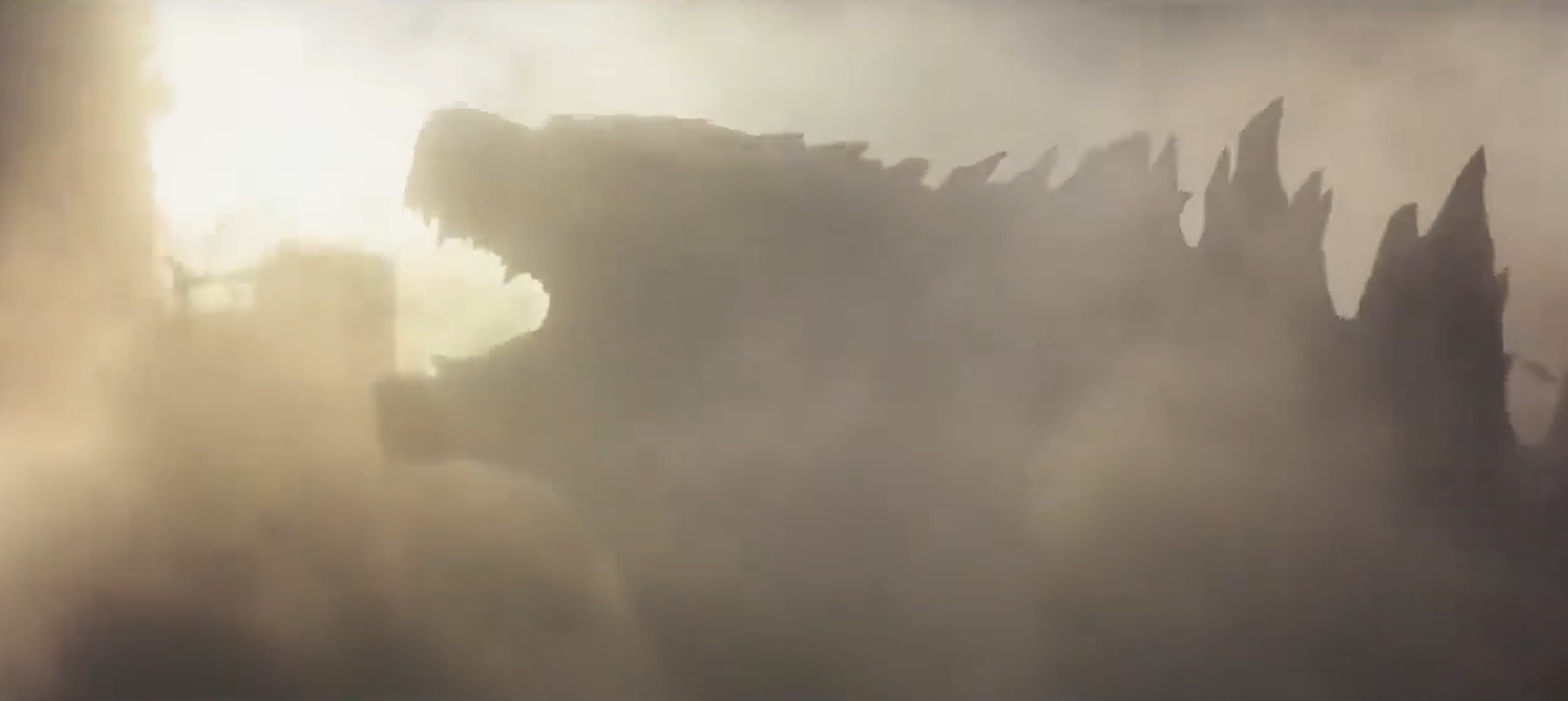
The teaser dripped in an eerie, apocalyptic tone, showing scenes of devastation in the aftermath of a kaiju battle, accompanied by Ligeti's Requiem and J. Robert Oppenheimer's infamous Destroyer of Worlds speech. It was short, it was simple, it was creepy as fuck, and ended on a shot of a massive figure moving in a cloud of dust and debris, the camera panning up the massive shape to reveal a row of jagged spines and a monstrous, bear like head before the shape let out a roar that became an instant classic, one of the best Godzilla roars of all time. For the first time in years, I was excited for Godzilla, though the thought of seeing Godzilla on the big screen for the first time was exciting enough on it's own, it was this teaser that really sold me. This Godzilla was going to be epic, dark and apocalyptic, a film that captures the monster at his most monstrous. It was surreal to think that soon, I'd be seeing a Godzilla film in a cinema, and there was little that could dampen my excitement for it. As the film approached, I only got more excited, just as I did all those years ago, I was scouring the internet for everything I could, every still, every TV spot, every fuzzy photo of the toys and screenshot of tie-in mobile games, because the film had them for some reason. My mother once again stepped up when the time finally came to book the tickets, it wasn't until I was in the car with my dad and some of my closest friends, on the way to the showing that I realised we weren't going to our local Odeon cinema, but to the IMAX.

Seeing Godzilla in the IMAX remains one of the best cinema experiences of my life. It was my first time in the IMAX, and seeing Godzilla in all his glory, on the largest screen I'd ever seen was unlike anything I'd experienced before. While the film didn't quite live up to that amazing teaser, I didn't care, I adored it, it was the coolest, most awesome film I had ever watched. I'll go into more detail about 2014 and the following ten years another time, but to summarise; Godzilla was back, he was no longer out of my reach and now that all the social pressures of school life were gone, there was nothing holding me back, Godzilla once again became my obsession and it's as strong now as it ever has been, Godzilla was a defining feature of my childhood, but it remains a defining feature in my adulthood, and this time I have no intention of letting go. But after running through this story again and again, after all the things I've said and wrote about Godzilla in the past, what he means to me is still a difficult thing to put into words. It was straightforward when I was young, I loved Godzilla because he was awesome; he was a hero monster who breathed fire and fought bullies, and in a way, I think the fact that getting a hold of Godzilla media was so hard was part of the appeal, that they always stayed out of my reach only made me want them more, making those magical moments when we hit the jackpot all the more exciting, all the more special. 

Now that Amazon exists and I'm an adult with my own money, getting Godzilla toys like the ones I wanted all those years ago is easy, and thanks to companies like Criterion, Arrow Video and Eureka, getting those old movies isn't anywhere near as hard as it used to be. It's incredibly satisfying to think about how far I've come on my treasure hunt, how vindicated my love of this franchise is now that I can finally enjoy these films in a way my younger self never had the chance to. Since 2014, I've very much been making up for lost time, building an impressive collection of Godzilla merch, toys, and even DVDs and Blu rays, all of which would probably make my younger self's head explode. One aspect of the Godzilla franchise that's always been unfairly ridiculed is it's special effects. Over the decades, plenty of media has made fun of Godzilla and of the kaiju genre as a whole, from Peewee Herman to Mystery Science Theatre to Jackass, and whether well meaning or not, it's led to a widely held belief that the kaiju genre is just cheap suits, cardboard sets and cheesy effects. I couldn't disagree more with this belief, naturally. While the quality of the Godzilla films' effects, especially in the later Showa films, does go up an down, I still can't help but appreciate the amount of creativity and effort that goes into these films. These older kaiju films will never look as clean or professional as modern Hollywood CGI, but that's a huge part of their charm. The effects artists of classic kaiju always had to work around technological and financial limitations, and while the result was almost always rough around the edges, the effort, skill and dedication almost always bleeds through. 

It's a common belief among fans of the horror genre that practical, in-camera effects are better than CGI and for many, including me, that belief extends to all genres. As someone who grew up loving shows like Stingray and Thunderbirds, there is something about real sets and pyrotechnics that no amount of shiny, photorealistic CGI can beat. Not to say that CGI is always bad, nor to say that practical is always good, just that there is something uniquely special about seeing a special effect that was filmed in-camera, to know that it was actually done and that decades ago, brilliant minds put all their effort into making it look as good as they possibly could. But on a deeper level, there is something even more special about Godzilla as a monster that is the driving factor in his longevity, it's something I always kind of understood about Godzilla, even if it's taken many years to fully appreciate it. Throughout my teenage years and into my adulthood, I've had somewhat of a passion for the history of the Second World War, spending countless nights digging through history books, websites and documentaries, as well as developing a keen interest in nuclear physics, though I'd never claim to be an expert in either field. I bring this up because I feel that my interest in War history and nuclear physics went hand in hand with my reawakened love for Godzilla, thanks to my newfound understanding of where he came from and what he truly is. Godzilla is more than just a monster, he's more than a villain, more than a hero, more than just a man in a suit. 

From his sombre and profound inception in the 1950s, to his bizarre superhero phase in the late 60's and early 70's, all the way back around to being profound and sombre again in last year's Godzilla Minus One, the potential of Godzilla as a storytelling tool is only as limited as the talent and creativity of the storytellers that use him. Despite going for seventy years, Godzilla has always found ways to stay relevant and unique, be that as a metaphor for the Cold War in The Return of Godzilla, a critique of big government in Shin Godzilla, or a big, angry lizard that fights giant monkeys in zero gravity in GXK. Godzilla has been many things over those seventy years, and while not every go round has been a genre defining success, the monster has consistently proven his ability to make it work, almost always staying consistent to his character. Godzilla is whatever he needs to be, which is what makes him so unique and special, not just to me, but to the entire film industry, and it's insane to think that it started because of one film, albeit a film unlike any other. Even after seventy years, the original Godzilla from 1954 is still one of the most striking films you can watch; using the framing of a giant monster movie to tell a story of death, war and the cruelty of atomic weapons, inspired by the real world horrors of Hiroshima and Nagasaki, as well as the tragic fate of the Lucky Dragon no.5 and her crew, commenting on the ethics and implications of using super-weapons. 

It still remains one of the most fascinating explorations of war in any film and in addition to birthing Godzilla, it set him up to forever be different from the rest of the classic movie monsters, he was always bigger than them and there was always something to be said through him, that's what really makes Godzilla so special. Like the masterpiece of a film that he started out in, there is a timeless quality to him that audiences of any time and age group can latch onto. Kids can love him because he's a cool monster that fights other cool monsters, but as they grow up, Godzilla grows up with them. Those kids can mature into appreciating the deeper meanings and philosophies behind the rubber suited exterior. There are layers upon layers to the Godzilla franchise that can only start to be peeled away as you grow older and start having new ideas and experiences, explorations of humanity, war, death and the dangers and cruelties of science and human arrogance going too far, all while never forgetting the memories of that simpler time when it was just cool to watch monsters fight. Or at least, this is how I feel about it, which answers the question we started with, I guess, it explains why Godzilla has always been so close to my heart, and why he probably will stay there for the rest of my life. As a kid, I loved Godzilla because he was awesome, as an adult, I still love him because he is art, and I think aspects of this can only be appreciated by those people who were once kids who just loved cool monsters, who had the chance to mature into seeing Godzilla as art. 

A God Incarnate
The answer to the question; what does Godzilla mean to me is always going to be a complicated one to answer. It was straightforward when I was a kid; I loved Godzilla because he was badass, and because wanton destruction and kaiju battles were really fun. But while many other childhood obsessions of mine faded into warm, nostalgic memory, Godzilla grew up with me as I came to understand and appreciate why this monster has endured for so long. Through him, I stoked a passion for history and found new ways of understanding the world. Through him, I opened my mind to new kinds of media and developed a passion for film and filmmaking. While that passion for film and filmmaking has waned in my adult years, my love for Godzilla has only continued to grow since he exploded back into my life in 2014, he will always have a particularly special place in my heart. Long Live The King. 

Tuesday, 2 July 2024

On The Election (2024)

I've not posted anything Political on this blog in a very, very long time, in fact, outside of a few rants about the Tories' online policies and the EU Referendum, I've barely touched the topic of Politics here. That's not to say I have no opinion on the matter though, because it should go without saying that I do, and that in this particular case, I have a fair bit to say. If you somehow don't know, on Thursday, the 4th of July 2024, the United Kingdom will be voting in a General Election, one that's at once long overdue and, if you believe a single word any of them say, far too early. When the Election was called on a rainy day back in May, I didn't really care, I'd accepted that neither of the options are in any way acceptable or deserving of being in government, in fact I wasn't sold on even bothering to vote, that was until Nigel Farage threw himself into the race and made this the most exciting and entertaining Election I've seen. Now, before we carry on, just know that I'm not an expert on the matter of Politics, I never have been and I've never claimed to be, but I've still got some things to say about it, as you do. 

The first General Election I voted in was the 2015 Election, in which I voted Conservative, I knew very little of Politics at the time, outside of the burning hatred my Grandparents had for Labour Party leaders; Tony Blaire and Gordon Brown, a position I went on to share. In 2015, however, the race was between the Tories, let by David Cameron and Labour, led by Ed Miliband, neither of which were especially remarkable candidates, though the Tories, supposedly being the more traditionalist and conservative party, appealed much more to my Grandparents, which was good enough for me. In 2015, Nigel Farage, who'd been campaigning for Brexit for his entire political career, spooked the Tories enough for them to cave and promise a referendum on Britain's membership of the EU. A year later, in the Brexit Referendum, I voted to leave, liking the sound of Britain getting it's sovereignty back from the increasingly federalist European Union, as well as another elephant in the room that we'll get back to. Fast forward to 2017 and things weren't going well; Cameron resigned after the Referendum and the Tories' new leader, Theresa May, was hopeless, weak, and looked to be completely compromising the promise of Brexit, either intentionally or through complete incompetence. In the 2017 Election, I Voted Liberal Democrat, not out of support for the Liberal Democrats, but out of dissatisfaction with the Tories, who it seemed were going out of their way to stall on delivering Brexit and throw away the wonderful opportunity for Britain that it represented. 

Running against May in that election was Jeremy Corbyn, who was a lunatic, albeit one who had complete confidence in his convictions, which ironically made him quite charming compared to the awkward, robotic and cowardly May. In that election, the Tories lost their majority in the House of Commons and were forced into a coalition with the DUP to form a government, something they also had to do with the Lib-Dems in 2010. Having lost the majority in the House of Commons, May had now found herself in an even weaker negotiating position, the exact opposite of what she was hoping for going into the election, while comparatively, Labour and Corbyn's position had been strengthened, further hurting Britain's chances of ever actually seeing Brexit happen. Fast forward again to 2019 and things looked like they were going to get better. Theresa May had resigned after being humiliated over her Brexit deal and in her place was Boris Johnson, a bumbling, charming idiot that, through his charisma and the promise of finally delivering Brexit, carried the Tories to a thundering Parliamentary Majority, humiliating Jeremy Corbyn in the process, who had promised a 'People's Vote' as an alternative message to Johnson's 'Get Brexit Done.' And while Nigel Farage had historically nipped at the Tories' heels on the issue of Brexit, his new party; the Brexit Party, humbly got out of the Tories' way so they could make good on their promise. As you'd expect, I voted Tory in 2019, wanting the madness of Brexit to finally end and for someone with a positive vision for post-Brexit Britain to be in charge. And then it all went completely to shit. 

The following spring, Covid-19 swept across the world and many countries, including Britain, responded by going into Lockdown; closing all "non-essential" businesses including gyms, pubs, shops and cinemas, as well as churches and schools. In addition to closing down basically the entire country, they also literally made it illegal to see people; implementing social distancing and isolation policies that prevented people from mixing. On top of that, they implemented nation-wide mask mandates that remained in place for over a year. All of these policies were completely arbitrary and had little to no effect on the spread of the virus, as claimed by numerous reports and scientific journals, all the while the Tories' scientific advisory body; Sage was staffed by at least one member of the Communist Party, and as it turned out, Johnson's Health Minister, Matt Hancock, was busted having an affair while the isolation policies were in place. The madness genuinely didn't stop; it became illegal to have sex with someone you didn't live with, it became illegal to sit on a park bench, and pubs became able to serve drinks if they were served with a "substantial meal," leading to arguments over what constituted a "substantial meal," all the while one of the masterminds of this madness was getting his scotch eggs nibbled on by one of his staffers. The justifications for the Lockdowns came from the modelling of people like Neil Fergusson, who predicted half a million deaths if no action was taken, only for it to take months for the official death toll to reach a tenth of that, and would you believe it, Fergusson was also breaking the rules and having an affair. Famously, when the second Lockdown was announced, the modelling used to justify it was proven to be unreliable within hours of the announcement, but the Lockdown was imposed anyway. 

But for as bonkers as it was, there was a sinister side, one that I genuinely think has given the people of the British Isles a kind of shared PTSD. Social interaction and contact was illegal, leaving countless people alone, isolated and scared, and completely unable to seek comfort in their friends and family, or to relieve the stress by indulging in hobbies and pass-times. Compounding this was a several-year-long campaign, carried out by the government and media class, to scare the British people into compliance. Johnson's government waged full-scale psychological warfare on the British, vastly overstating the lethality of the virus, counting Covid deaths as anyone who died within twenty-eight days of a positive test, regardless of what killed them, and flooding the TV, radio and newspapers with constant messaging of the threat. There were posters and advertisements supposedly showing dying Covid patients, asking viewers to "look them in the eyes" and tell them the threat wasn't real and that they followed the rules, using aggressively emotive imagery and language to guilt and coerce people into obeying the rules. They actively encouraged snitching behaviour as well by turning the fear and propaganda on the people, incentivising and encouraging the more zealous and fearful of the population to rat out and be confrontational with people who didn't follow the rules, who were being selfish and putting everyone else at risk, so a lot of rule breakers went on to be investigated and fined, leading to widespread distrust and paranoia, which inevitably further compounded the fear and isolation. 

I myself was on the receiving end of a lot of this zeal and abuse, being someone who very quickly decided to ignore the mask mandate and who was very vocal about my opposition to the rules, which got me branded as a selfish, ignorant, stupid, science-denying, cruel, evil Granny killer, and yes, I was called all of those things, as well as being accosted multiple times in shops for ignoring the mask mandate. All of this culminated in the argument about Vaccine Passports, an idea that was not just being floated around, but was actually being implemented in several major countries across the EU like France, Germany and Austria, as well as in places like Canada and New Zealand. The plan would have effectively forced unvaccinated people into permanent Lockdown while allowing the vaccinated to get on with the "new normal," which still meant social distancing and masks, but also gave you access to luxuries like restaurants, cinemas, gyms, sporting events, even churches and public transport. Had the Vaccine Passport system been widely adopted and kept, it would have created a two-tier society in which unvaccinated people became an underclass with less rights and freedoms than the vaccinated, and this was something all the governments considering and implementing them knew. Famously, then Prime Minister of New Zealand, Jacinda Ardern, when asked by a journalist about creating a two-tier society, smirked and said "that is what it is." 

Covid Vaccination became a requirement for doctors and nurses within the NHS, despite the entire justification for the Lockdowns being to protect the NHS and allow it to carry on running smoothly, it was now at risk of losing as many as a eighty-thousand staff. At the same time, the NHS was falling apart; completely failing to treat and diagnose patients, all the while being pedestalised as a divine institution that was beyond criticism of any kind, a position that's become a lot harder to defend in recent years as the NHS has failed to recover and is continuing to fail it's patients. Then there was the care homes scandal, in which British care homes became prisons where countless elderly died alone, confused and scared because their families were forbidden from visiting them, all the while untested hospital patients were being moved into said care homes with the full knowledge of the NHS and the Department of Health and Social Care. And on top of all the old people that had the final years of their lives completely destroyed, an entire generation of kids had their futures destroyed by being robbed of two years of their education and vital social development. And all the while people were actively having their lives destroyed by the government and it's evil policies, criticism of those policies was branded as insane, conspiratorial and dangerous, with concerns about the safety and effectiveness of the vaccine being aggressively supressed and discredited, even as it was being effectively forced onto the people and an unfortunate few were suffering from severe reactions to it. 

And to top off all of this insanity and cruelty, while the country was in full Lockdown, the Tories, who had implemented the Lockdowns, were throwing Christmas parties and Labour's new leader; Kier Starmer, who had been in full support of said policies, was illegally gathering with his staff for drinks. Naturally, the news media stabbed the political class in the back for their breaking of the rules, all the while refusing to acknowledge the real reason people were mad; that the political class knew the policies were stupid, ineffective and evil, and implemented them anyway while deeming themselves exempt. The revelation that the Tories broke their own rules caused the entire Covid narrative to collapse, and today most people look back at this period in recent history as though it were a bad dream. There are some of us out there who will never forget though, nor will we forgive, I'm one of them and even to this day, I hate Boris Johnson and the entire political establishment with a burning passion. And even in the years after Covid, the Tories have continued to be traitorous and crap; with Boris committing Britain to supporting Ukraine in it's war with Russia, a war that he personally played a key role in prolonging. But then the bastard decided it was time to step down, and when he did, he was replaced by Liz Truss, someone every bit as thick and with nowhere near the charisma, but someone who's heart appeared to be in the right place. 

When Truss took office, Britain's economy wasn't doing so good. Endless money printing during the pandemic had rocketed the rate of inflation, the war in Ukraine had caused disruption to food and energy production, causing prices to go through the roof, further compounded by the British government's refusal to subsidise British food production and its fanatical commitment to green energy as part of it's Net Zero plan. Within two months of Truss taking office however, she was forced to step down after apparently and miraculously destroying the economy with tax cuts, only to be replaced by her opponent in the Tory leadership race, none other than Boris Johnson's Chancellor of the Exchequer, Rishi Sunak. So with no electoral mandate, sky high inflation and the highest tax burden since the end of World War II, Sunak bravely carried on with business as usual, in which time Britain began to literally, as well as figuratively, fall apart. Now, in addition to taxes, inflation, house prices, and energy, fuel and food costs being the highest in decades, on top of the complete destruction of the British high-street through the bureaucratic strangling of small businesses and closures caused by the Lockdowns, roads, schools and hospitals were beginning to crumble, and through financial mismanagement and incompetence, the institutions tasked his maintained our infrastructure were unable to do their job. And all of this was now being overseen by a man that the electorate and Tory base did not vote for or support, and who they believed had no love or loyalty for Britain, just great. 

There's an elephant in the room here though, something I haven't mentioned yet, but that has compounded every single issue I've brought up. It's the issue on everybody's minds this Election, it's immigration. Journalist and commentator, Tom Harwood once quite hilariously observed that in the late 1990's, "something happened" that caused house prices to spiral out of control, and even after nearly thirty years, they're still spiralling, and we're still not building enough houses to meet demand, even though Britain has a sub-replacement birth rate. Meanwhile, the NHS is falling way behind on appointments and treatments, with a tenth of the entire country on a waiting list, despite funding for it being increased year on year. In major cities like London and Manchester, crime has skyrocketed and community cohesion has almost entirely eroded. Entire boroughs in many major cities have effectively been colonised, and have become isolated from and hostile to the surrounding culture, and as highstreets across the country have withered and died, they're now swarming with Turkish barbers and Vape shops. But probably the highest profile example of Britain's 'cultural enrichment' is the Grooming Gangs, organised groups of men, almost always from a foreign background, that groomed and sexually abused British girls, and that managed to get away with it for years because the police, who were aware of the abuse, refused to take action out of fear of being called racist. 

The Tory party has promised in manifesto after manifesto to bring down the rates of immigration into Britain, and where Brexit was motivated by a desire to see the end of free movement of people, it was Boris Johnson's government that decided infinite immigration was the future, even as he shut down all the pubs and schools and told everyone to stay at home and be afraid. In the last few years of Tory rule, immigration has increased year on year, not just from the tens of thousands that cross the Channel illegally and are somehow allowed to stay in Britain, but from the hundreds of thousands of legal immigrants that are allowed in on work, student and dependant visas. Not long ago, the Tories announced a plan to start flying illegal immigrants to Rwanda, a plan that's so far cost god knows how much money, not seen any results, failed to discourage opportunistic illegals, and doesn't even factor in the bulk of immigration into Britain that's coming in legally and being allowed in by a supposedly conservative and anti-immigration Tory government. And to add insult to injury, when illegal immigrants arrive, instead of being sent straight back, they're shacked up in hotels and allowed to apply for asylum, meanwhile all the homeless people across the country get to carry on sleeping on benches and in the doorways of shops. And just in case you're not insulted enough, to publicly complain about immigration is to be branded a far-right, racist Nazi and to be targeted for harassment by demented leftists, or worse, denied services and employment. But for the immigrants, these concerns don't apply, and they have no obligation at all to be decent or respectful to the native population, even further contributing to the erosion of community cohesion and the simmering resentment towards the new arrivals. 

The problem the Tory party has here is that they've been in power for fourteen years. In that time, there have been three General Elections and in each one, they've promised to reduce immigration, but there's always been someone or something else to blame for them not being able to; the European Court of Human Rights, the European Union, the Labour party, "lefty lawyers," human trafficking gangs, the French, and foreign conflicts. But at this point, the good will is completely gone; no one trusts the Tories to reduce immigration, just as no one trusts them to lower taxes, get housing, food and energy costs under control, or fix our crumbling infrastructure and institutions, in fact, Tory voters now see the Tories themselves as the source of all these problems, the party which has failed again and again and again and again, and which seems destined to continue to fail forever, almost as though it's trying to. And on the other side is Kier Starmer's Labour party. The Tories' message in this election is to not let Starmer and Labour into government because they'll be worse. I have no doubt they'll find a way to be worse. Starmer has promised to clear the backlog on immigration and build a million new homes, making it abundantly clear that mass immigration will continue. He's vowed to solve the energy crisis by investing in green energy as part of their Net Zero policy, which is the same as the Tories' policy, just with a 2030 deadline instead of 2050, so they're not going to fix energy costs. Going back to Covid, Starmer and Labour's only objections to the Tories' Covid response was that it wasn't tough enough, making me very doubtful that they will respect and uphold the British people's rights and freedoms any more than the Tories did. 

Despite promising more of the same while also blaming everything on the Tories, Labour look set to win this Election, not through their strength, but through the total collapse of the Tories, who have had fourteen years to stop the degradation of Britain, and used that time instead to accelerate it. Now all they can offer is an assurance that things will be worse under Labour, hardly an inspiring or optimistic message, but it seems they just can't help themselves. In a desperate bid to hold on to older voters, the Tories decided that, were they to be re-elected, they would introduce National Service, a policy that's unsurprisingly massively unpopular with the young voters it will effect, the very same young voters who feel that the Tories have betrayed them and stolen their futures, to say nothing of the erosion of the very concept of the nation state and national pride that started under Blaire in the 90's and was continued under the Tories, to the point that you can't fly an English flag anymore unless you're a football hooligan or a racist. All the while LGBT ideology has been a adopted as a sort of state religion, one protected under law and actively promoted by both the Tories and Labour, and if it's all the same, I'm not prepared to die in some foreign war for the sake of Gay Rights, nor am I prepared to die for some stuffy office manager that thinks he's making the world a better place, be that Starmer or Sunak. 

So when the election was called, I didn't really see a point in voting, I felt that I didn't have a choice in the election, that the only meaningful difference between the two options is the colour of the rosette, and that incompetent, boring globalists who don't care about this country, my country, don't deserve my vote, be they red or blue. Then in barrels the man of the hour, Nigel Farage. Before the return of the Farage, the Brexit party had been rebranded as Reform UK, a party under the leadership of Richard Tice, one that positioned itself as a right-wing alternative to the Tories and promised to actually answer the demands of the British electorate and bring meaningful and positive reform to Britain. Except like Liz Truss, while Tice's heart is in the right place, he is still a product of the political machine, and like Truss, I doubted his ability to deliver on the promises he made, as nice as they sounded. I met Richard Tice on the campaign trail while on holiday in Skegness, I shook his hand and told him I intended to vote Reform, and that wasn't a lie. After the election was called, Nigel Farage stepped back in, not only running for Parliament, but also as the leader of the Reform party, and over night, this election became awesome. Suddenly the discontented voters that the Tories had alienated had someone they could rally around, an outsider to the political establishment that was making all the right promises, saying all the right things, had complete confidence in himself and his beliefs, actively engaged with and was honest to his supporters and, perhaps most impressively of all, didn't give a damn what the political establishment or news media thought about him. 

Farage almost instantly sent Reform rocketing in the polls, quickly closing the gap and then, amazingly, overtaking the Tories, while also putting a noticeable dent in Labour's lead. Starmer and Sunak are hopelessly unexciting and unimpressive, then along comes Farage, getting up on stage like some kind of Rockstar, complete with roaring crowd and pyrotechnics, and while Labour and the Tories are floundering on social media sites, Reform's social media is exploding. It genuinely looks like all the political will in the right wing of the British electorate, having been beaten down to almost nothing by endless Tory failures and lies, has reawakened and mobilised behind Farage, and whether you love him or hate him, you can't deny him this achievement. With only days to go before the election, all the stops have come out to try and discredit Farage, from channel 4 releasing footage of a supposed Reform canvasser making racist remarks about Sunak who, it turns out, may or may not be a professional actor with ties to Channel 4, to past comments Farage has made about NATO's responsibility for the War in Ukraine, to Farage being ambushed about his racism on Question Time by guests who turned out to have ties to the BBC, to the most desperate allegation of all, that Farage is a Putin lovie whose massive upswell of social media support is actually an army of Russian bots. 

Like a certain other Populist superstar, the endless attempts to damage him are having the opposite effect; far from people now believing Farage to be a racist, they're now seeing him as a man under attack from the political and media establishment, who would only go to such depths to hurt his chances in the election if they were afraid of him, a notion that's only further galvanising his supporters who, like him, hold beliefs that the establishment have deemed to be morally wrong and in need of being stamped out. It's a great tragedy that Boris Johnson saw himself as the heir to Churchill, a true leader who would see his great nation through its darkest hour, when he turned out to be one of the architects of it, and in his place, there is Farage, a man who might actually be the change this abused nation has been crying out for. Does he have a chance of winning this election though, unfortunately, no. Even for as popular as Reform has become in the last few weeks, it's still not enough, and as the Tories have crumbled, this election will be a Labour victory, but give it a few years, let Labour not be the change people want and let them continue to ruin Britain just as the Tories have, and come the next General Election, who knows, maybe Reform and Farage will be able to make their move, and maybe we might have an actual conservative government that will look after this country and, you could say, make Britain Great again.

I'm not sure how to wrap this one up, but as I said at the beginning, I'm no expert on politics, I'm just a guy with an opinion, so if you think I'm wrong, that's fine, and this isn't me trying to persuade you on who to vote for. I'm just someone who's had enough of Labour and the Tories and wants there to be a change in the political order of my country. Do I know for sure that Farage and Reform are that change, no, I don't, do I know for sure that they can win the next election after this one, no, do I even know if Reform will get it's foot in the door in this election, no. But if they did, and if Farage actually is the change I want, the next couple of years of British politics will, at the very least, be a lot less boring.